
For most people weighing it up, cybersecurity is a good career in Singapore: demand is strong and structurally supported, the work suits people from many backgrounds, and you can enter without an IT degree through funded, hands-on cyber security courses. The honest caveat is that no field offers guarantees, and the switch takes real effort. This post gives you an evidence-based answer rather than a sales pitch: the case for it, the trade-offs, who it suits, and how to test it before you commit.

Is Cybersecurity Actually in Demand in Singapore?
Yes, and it is a healthier backdrop than many career options offer. The Cyber Security Agency of Singapore (CSA) and IMDA have both highlighted a persistent cybersecurity talent gap, and workforce development in the field is a stated national priority supported by SkillsFuture and by the Ministry of Manpower’s Career Conversion Programmes. Every sector (finance, healthcare, logistics, government) now depends on secure infrastructure, and boards increasingly treat security as something to staff properly rather than an afterthought.
That demand is structural rather than a passing trend. High-profile incidents at major Singapore-listed organisations have made security a board-level concern, and the talent pipeline from traditional degrees simply cannot fill roles fast enough. That gap is precisely what creates room for capable career switchers who are willing to train properly. For the wider picture, see why cybersecurity demand stays strong in a stagnating job market, the 2025 talent shortage, and what Singapore’s 2026 Shortage Occupation List means for cybersecurity careers.
Do You Need a Degree or IT Background?
No. This is not just our opinion: across the graduates who secured cyber roles, 75% had no prior IT background. They came from banking operations, administration, retail, teaching and the uniformed services. What employers care about is demonstrable skill (hands-on labs, a recognised certification and a small portfolio) far more than a specific degree.
The traits that predict success are mostly non-technical, and they transfer from other careers. Concretely: a finance or audit background maps naturally onto governance, risk and compliance work; customer-service and hospitality experience builds the calm communication a security team relies on during an incident; operations and logistics translate into the process discipline of incident response; and healthcare brings a respect for procedure and data sensitivity. None of that experience is wasted; it is often what distinguishes an effective analyst from a merely technical one.
What you do need is curiosity about how systems work, attention to detail, and a willingness to keep learning, because the field keeps changing. If that sounds like you, the technical foundations are learnable. For more, read the top skills needed to succeed in a cybersecurity career, and our full pillar on the mid-career switch into cybersecurity.
What Does the Work Actually Involve?
Cybersecurity is broad, but most career switchers start in a defensive operations role. The most common first role for our graduates is SOC analyst (Security Operations Centre analyst): monitoring systems for suspicious activity, investigating alerts, and escalating genuine threats with a clear written explanation. It is methodical detective work, not the dramatic version from films.
Here is what a typical moment looks like:
The scene: An alert fires: an account in Finance has just downloaded an unusually large volume of files at 2am.
The reality: Most alerts are not attacks. Perhaps someone was working late. Your job is to investigate calmly, confirm whether the behaviour is normal for that user, and either close the alert or escalate it with a clear explanation of what you found.
That mix of patience, judgement and clear communication is exactly what many mid-career professionals already bring. You can read about the day-to-day in a day in the life of a SOC analyst. From there the field branches in several directions:
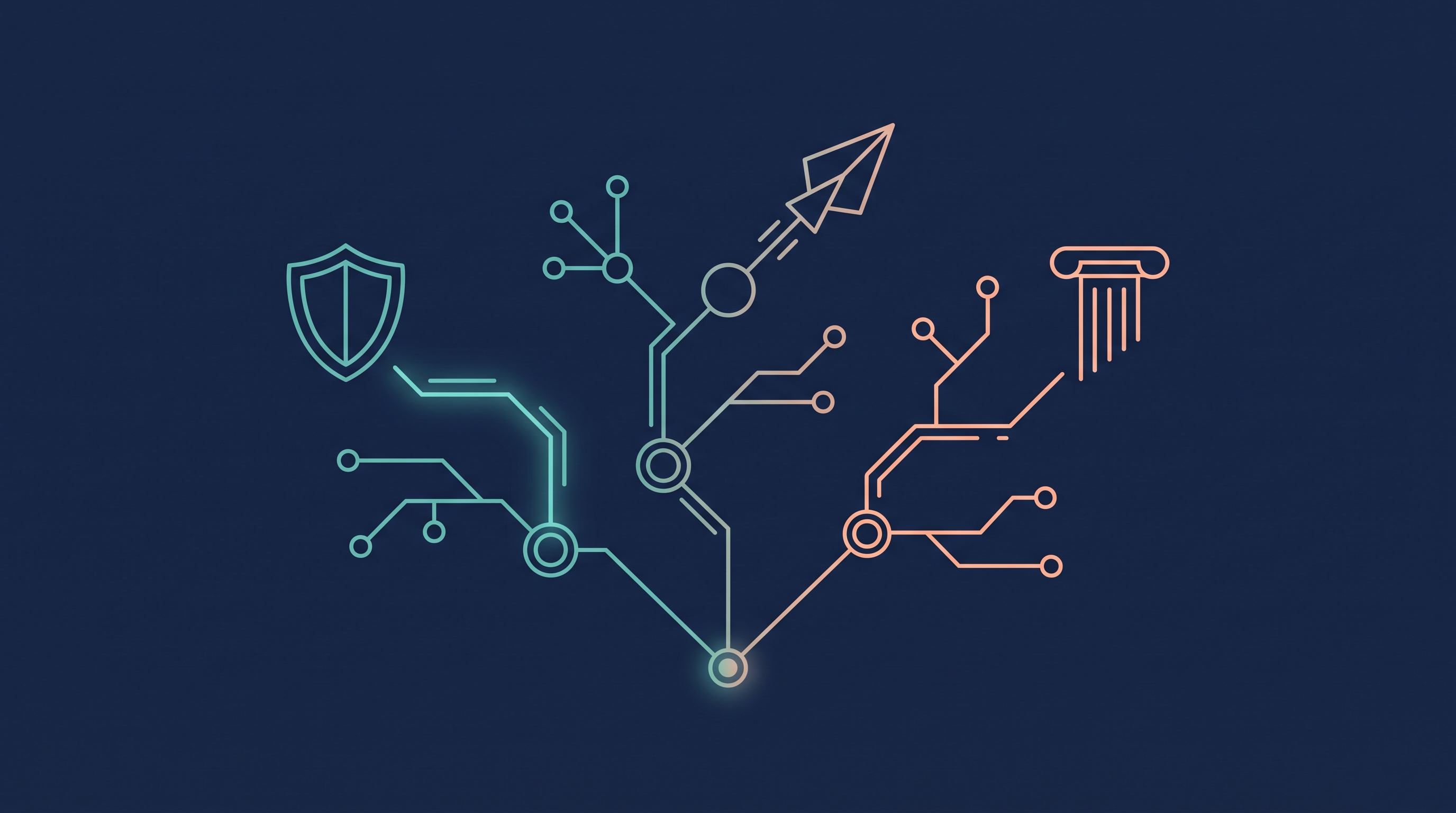
- Defence: senior SOC analyst, incident responder, threat intelligence analyst.
- Offence: penetration tester, red team operator, vulnerability researcher.
- Governance: GRC (governance, risk and compliance) analyst, security manager, and in time the CISO track.
The point is that “cybersecurity” is not one job. If shift-based operations do not appeal, governance and consulting roles offer steadier hours, which matters when you weigh whether the work suits your life.
What Can You Earn in Cybersecurity?
Pay should inform your decision, but treat the numbers as market context rather than a promise. On public Singapore salary data, entry-level SOC analyst roles pay roughly S$4,000 to S$5,500 a month, with experienced specialists, architects and managers earning considerably more. These are indicative third-party ranges that vary by employer and sector: they are not figures CFCI quotes for its own graduates. Cybersecurity tends to pay at the higher end of the broader IT market because the skills are scarce and the stakes are high, and pay rises quickly as you specialise. For the full breakdown by seniority, see our dedicated guide to the cybersecurity salary in Singapore.
What Are the Honest Downsides, and Who Is It Not For?
It would be dishonest to present only the upside. There are real trade-offs worth knowing before you commit.
- It takes effort. Expect roughly seven to nine months of focused learning from your first info session to a first role, often alongside work or family. This is the single biggest filter: not raw aptitude, but the discipline to keep going through the difficult stretches.
- No one can promise you a role. Be sceptical of any provider that claims to. What good training does is make you genuinely employable, then support your move into the field through career services (CV and interview preparation) and ad-hoc job openings shared with our graduates. The role itself is something you earn, not something a course hands you.
- Some jobs carry pressure. Operational security work can involve shift coverage and time-critical incident response. Many people find that energising; some do not. The good news is that the field is wide enough to choose a path that fits your temperament, from round-the-clock SOC work to steadier governance and consulting.
How Do You Actually Get Started?
If the honest version still appeals, the route is well-trodden. A structured, hands-on programme built for working adults takes you from foundations to job-ready in roughly seven to nine months. In practice the journey has four phases: foundations (network and security fundamentals, months 1–3); hands-on specialisation (real tooling and realistic incident scenarios, choosing a defence or offence track, months 3–7); certification (GCIH on the defence track or OSCP on the offence track, around month 8); and evidence and rebrand (a small portfolio of documented lab work plus CV and interview preparation, months 8–9). Each phase builds something concrete you can show an employer.
Two practical first checks before you enrol: read how long it really takes to switch into cybersecurity to pressure-test the timeline against your own life, and see what SkillsFuture funding for cybersecurity courses you can claim; it can change the maths considerably. The full step-by-step route is in our mid-career switch guide.
The outcomes are real: 80% of graduates who completed the full programme and career services secured cybersecurity employment (as of early 2026). Since 2021 we have trained more than 400 learners, and 40+ organisations have hired our graduates, with the most common first role being SOC Analyst: 7 of the last 20 graduates who secured employment.
Is It a Good Career for the Long Term?
This is where cybersecurity stands out. The same digital dependence that creates demand today is deepening, and the threat landscape keeps evolving, which keeps the work intellectually fresh and the skills valuable. Expertise compounds: every incident you investigate and every system you test adds to a professional base that becomes harder to replicate and more valuable to employers over time.
Progression is genuine, too. A common arc runs from generalist analyst in year one, to a specialism (incident response, threat intelligence, penetration testing or GRC) by year three, toward lead or management roles beyond that, with pay and responsibility tracking demonstrated capability rather than tenure alone. Few fields reward self-directed learning so directly.
It also compares well against other technology pivots. Software engineering and data science roles often still expect a degree or strong mathematics; cybersecurity weights demonstrable, hands-on skill and a recognised certification more heavily, which is why a structured seven-to-nine-month route can work for someone with no IT background. Combined with strong, policy-backed demand and its relative AI-resilience, that makes it one of the more pragmatic mid-career pivots available in Singapore today.
The obvious modern question is whether AI will erode it. The honest answer is that AI is changing the work more than replacing it: automating routine detection while handing attackers new tools, which raises the need for skilled people to investigate, judge and respond. For a fuller treatment, read our take on the role of AI in cybersecurity. On balance, cybersecurity is widely considered one of the more AI-resilient technology careers.
Conclusion: How to Decide for Yourself
The smartest way to answer the question is to try before you buy, with evidence in front of you rather than a brochure. Here are three low-pressure ways to test it, lowest commitment first.
- Start simple: attend a free information session. Meet trainers, see the curriculum and ask honest questions about outcomes. Book a free info session.
- Try it hands-on: join an experiential workshop. Run a real cybersecurity scenario and see whether the work genuinely suits you. Join a workshop.
- Go deeper: explore the programme. When you are ready to see the full curriculum, timeline and career support, take a closer look at Cybersecurity Career Kickstart+.
A good career decision is one you make with evidence in front of you. For most people who weigh it honestly and are willing to put in the work, cybersecurity in Singapore is a genuinely good bet.
Frequently Asked Questions
Is cybersecurity in demand in Singapore?
Yes. The Cyber Security Agency of Singapore and IMDA have both flagged a persistent talent gap, and workforce development is treated as a national priority. Demand is strong, though no field offers guarantees.
Do I need a degree to work in cybersecurity in Singapore?
Not necessarily. Many employers value demonstrated skills, a recognised certification and a portfolio over a specific degree. Across our graduates who secured cyber roles, 75% had no prior IT background.
Is cybersecurity a stressful career?
Some operational roles involve shift work and incident response, which can be high-pressure, while others such as governance, risk and consulting are steadier. Many people find the problem-solving energising. It is worth knowing the range before you choose a path.
How much do cybersecurity professionals earn in Singapore?
Public salary data puts entry-level SOC analyst pay at roughly S$4,000 to S$5,500 a month, with experienced specialists and managers earning considerably more. These are third-party market ranges that vary by employer and sector, not figures CFCI quotes for its own graduates.
Will AI replace cybersecurity jobs?
AI is changing the work more than replacing it. It automates routine detection but also gives attackers new tools, which increases the need for skilled people to investigate, judge and respond. Cybersecurity is widely considered one of the more AI-resilient technology careers.
How do I start a cybersecurity career in Singapore with no experience?
Start with structured, hands-on training aligned to a recognised certification (GCIH or OSCP), build a small portfolio, and use career services to prepare your CV and interviews. Most career-switchers reach entry-level competency in seven to nine months while working.